

Contact here for Advertising & Partnerships // Support the newsletter here.
Written by David Skilling
Golf has spent years finding ways to play the game away from the golf course, and Nashville is about to push that idea further.
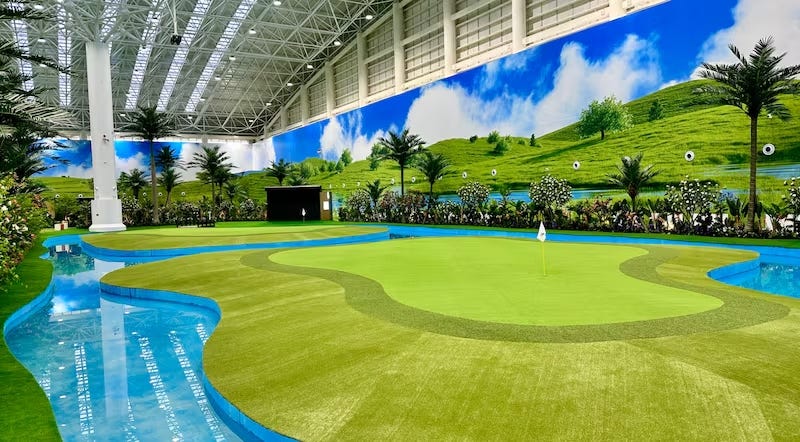
CityGolf USA plans to open what it describes as “America’s first full 18-hole indoor golf course”, built around sequential play rather than a row of simulator bays. The aim of the game is for players to hit longer shots using GOLFZON technology, then move onto real putting surfaces and dedicated short-game areas before continuing to the next hole.
The ambition is to recreate the rhythm of a round indoors, with a restaurant, bar, retail, coaching, and event space wrapped around the golf, rather than treating the golf as a single activity within a larger entertainment venue.
Golf has been moving towards this for some time as simulators removed the need for acres of land and weather that cooperated for several hours, while places like Topgolf made hitting balls socially accessible to people who might not usually book a tee time. Then TGL came along and added something different, showing what hybrid golf looked like when sport itself, rather than practice or entertainment, moved indoors.
The indoor game was developing before Tiger Woods and Rory McIlroy pushed to make it a competitive sport, but TGL did make the format familiar, with golfers now accustomed to watching elite players hit into a screen, move onto a real green and continue competing without pretending they’re standing on a traditional course.
CityGolf takes it a step further by making the concept accessible to recreational players.
A standard simulator round keeps you standing in roughly the same place while the course changes on a screen, whereas the Nashville concept is built around moving through 18 holes and physically finishing them, which leans into what a round of golf actually feels like.
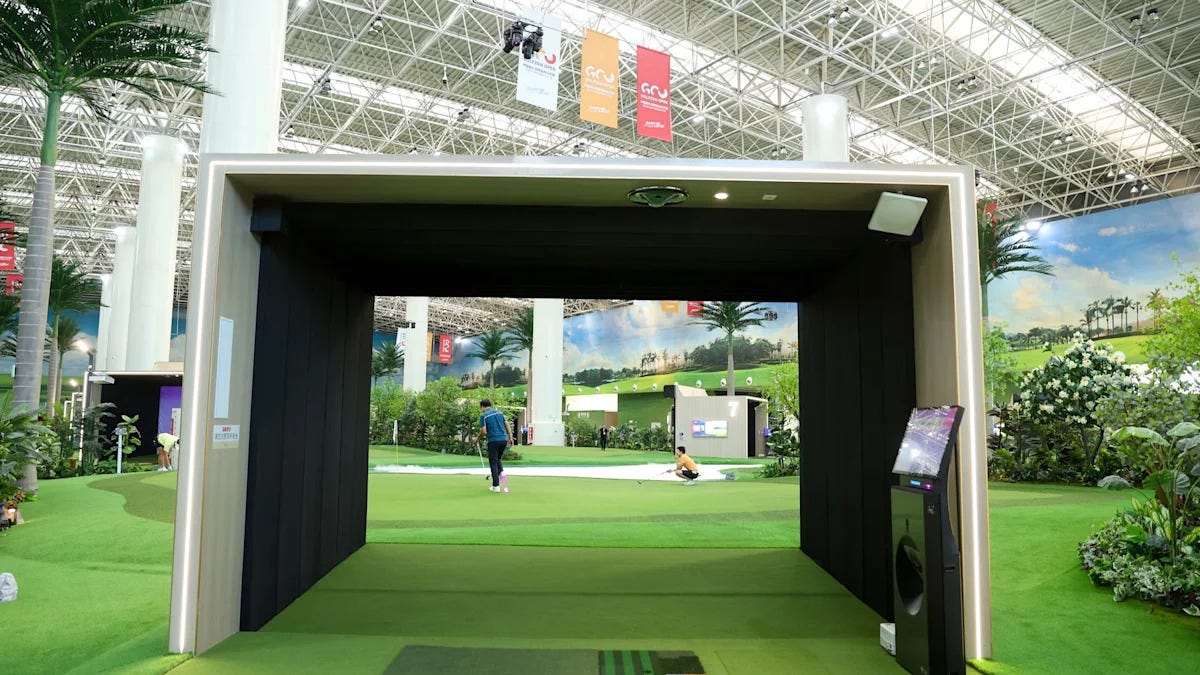
For a lot of us, much of golf’s appeal sits between the shots, as much as it does the shots themselves. You move around, talk, wait, read a different lie, watch your other people’s shots, see the ball move in the air, and eventually end up somewhere for a drink. CityGolf can’t reproduce everything a real course does, and it doesn’t need to, but preserving more of that sequence makes the proposition more interesting than simply producing a better simulator.
The model is still unproven in the US, and accessibility will depend partly on price, membership and whether people actually want a two-and-a-half-hour indoor round, but I do think it has a place for those limited on time who still want to get as much of the golf experience as possible, after work, and at times of year when daylight is limited.
Some might wonder if this is a sign of an industry shift, but I can assure you that traditional golf is far from shrinking: 29.1 million Americans alone played on-course in 2025, marking its eighth consecutive year of participation growth. Golfers aren’t choosing between outdoors and indoors, but adding formats around the game to help people get reps in a variety of ways is a positive opportunity in my opinion.
Thanks for reading. If you hit the like button, you’ll be doing me a huge favour.
David Skilling: follow on Instagram